


Many people feel frustrated after buying bottled dill salad dressing recipe. It often tastes too sour, too thick, or simply bland. Some versions also contain preservatives, added sugar, and artificial ingredients. If you care about healthy eating, this can be disappointing. You want something fresh, clean, and full of real flavor. However, finding a good option in stores is not always easy.
I faced the same problem in my own kitchen. After testing homemade versions many times, I discovered that fresh dill and balanced ingredients make a huge difference. When you control the oil, acid, and herbs, the dressing tastes brighter and more natural. Over time, I learned simple methods that improve both flavor and texture. In this guide, I will share those methods so you can make dill salad dressing that tastes fresh, healthy, and reliable every time.
What Is Dill Salad Dressing?
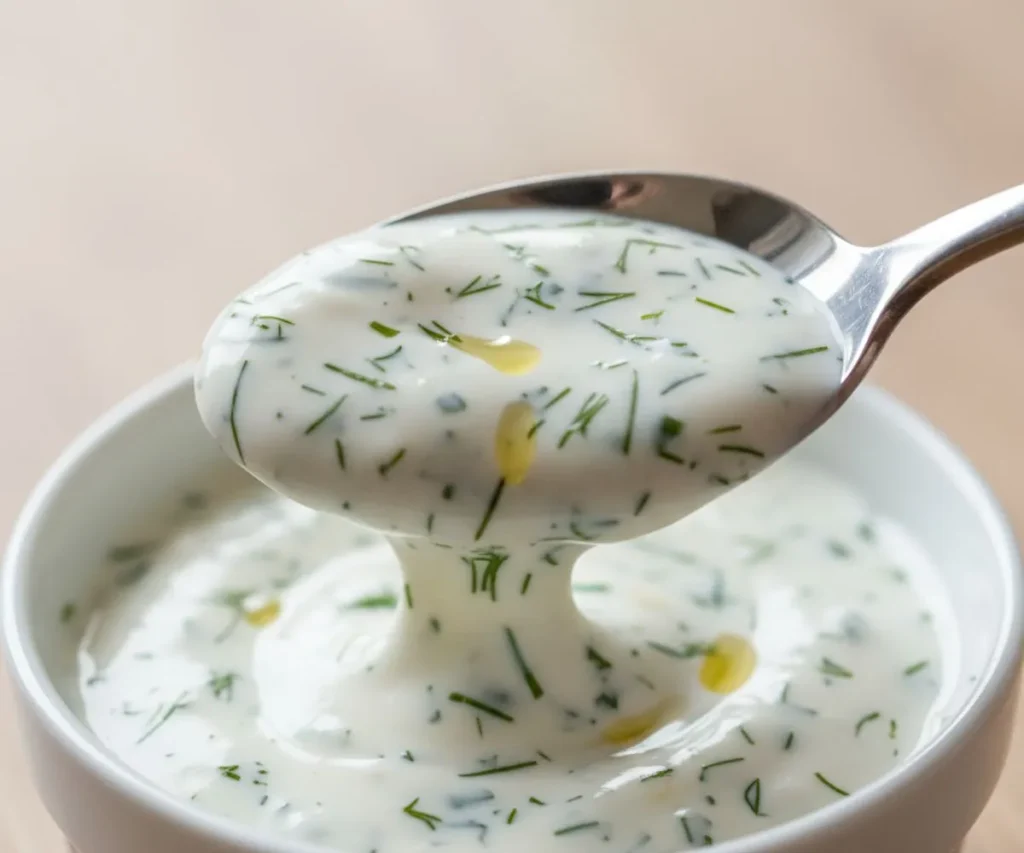
Dill salad dressing is a homemade sauce made with fresh dill, oil, and an acid like lemon juice or vinegar. Some versions use yogurt or mayonnaise to make it creamy.
There are two main types:
- Creamy dill salad dressing
- Dill vinaigrette dressing
Creamy versions are thicker. Vinaigrettes are lighter and dairy-free.
Why Make Homemade Dill Salad Dressing?
Homemade dill salad dressing gives you full control.
You avoid preservatives.
You reduce added sugar.
You control the fat level.
You adjust flavor to your taste.
In addition, homemade dressing often costs less than store-bought options.
Classic Creamy Dill Salad Dressing Recipe
Ingredients (Makes about 1 cup)
- ½ cup Greek yogurt
- 2 tablespoons olive oil
- 2 tablespoons fresh lemon juice
- 2 tablespoons fresh chopped dill
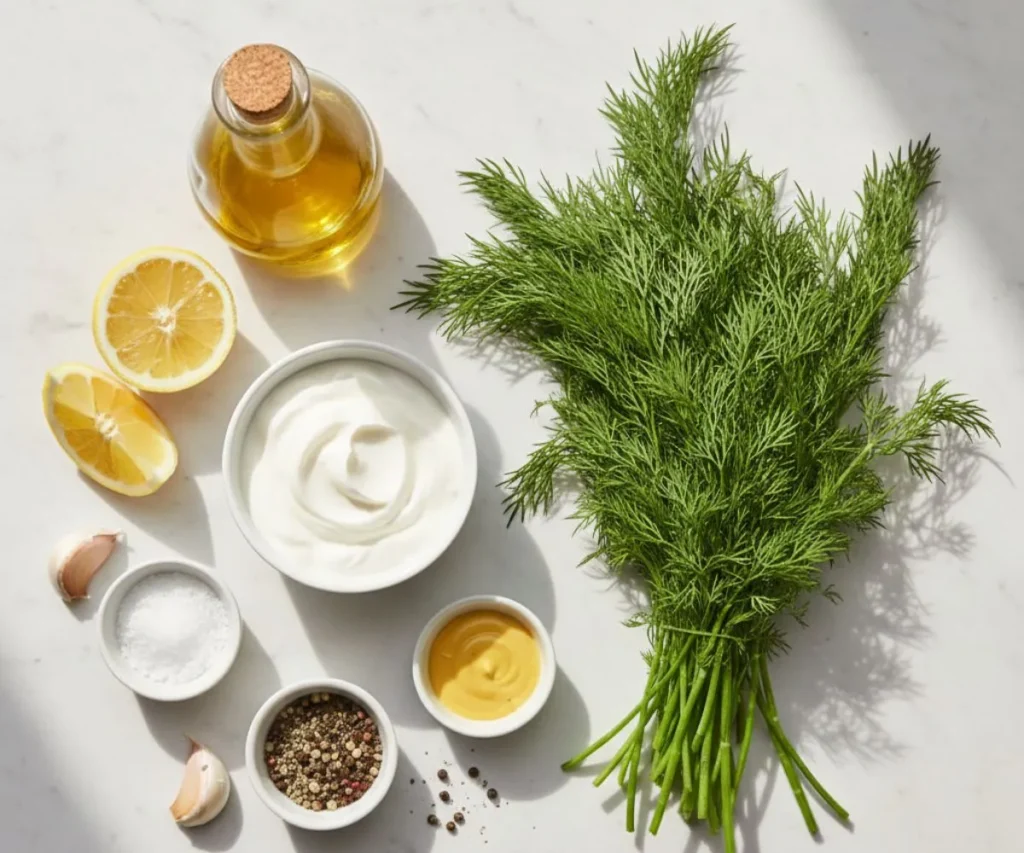
- 1 teaspoon Dijon mustard
- 1 small garlic clove, minced
- ¼ teaspoon salt
- ⅛ teaspoon black pepper
Instructions
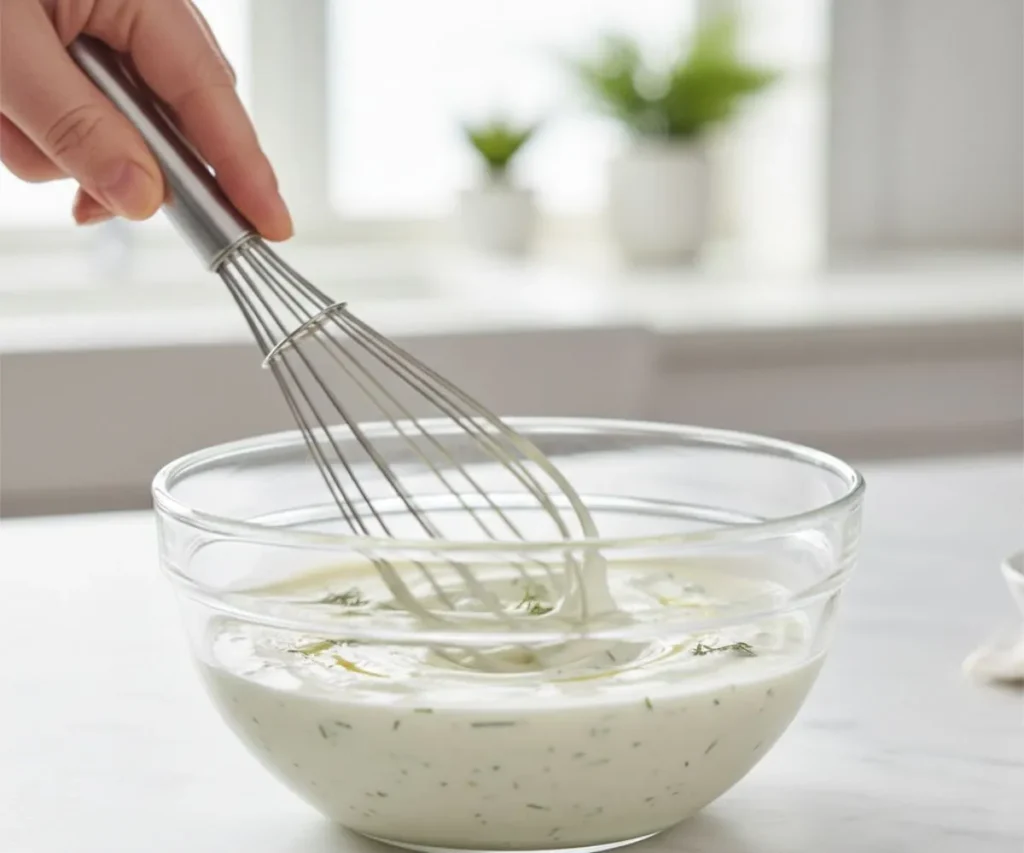
- Add yogurt to a bowl.
- Whisk in olive oil and lemon juice.
- Add dill, mustard, and garlic.
- Mix until smooth.
- Add salt and pepper.
- Chill for 30 minutes before serving.
This resting time improves flavor.
Why These Ingredients Matter
Each ingredient has a purpose.
- Greek yogurt adds creaminess and protein.
- Olive oil adds healthy fats and smooth texture.
- Lemon juice adds acidity. It balances the fat.
- Dill gives the fresh herbal flavor.
- Dijon mustard helps emulsify the dressing. It prevents separation.
- Garlic adds depth.
Good dressing always balances three things:
fat + acid + seasoning.
If one is too strong, the flavor feels off.
Is Dill Salad Dressing Healthy?
Yes, dill salad dressing can be healthy.
Greek yogurt adds protein. Olive oil supports heart health. Dill contains antioxidants and vitamins A and C.
However, health depends on your ingredients. Mayo-based versions have more calories. Yogurt-based versions are lighter.
If you want a low-calorie option, reduce oil and use non-fat yogurt.
Calorie Comparison (Per 2 Tablespoons)
| Dressing Type | Approx Calories |
| Yogurt-Based Dill Salad Dressing | 45–60 |
| Oil-Based Dill Vinaigrette | 80–100 |
| Ranch Dressing | 120–140 |
This shows dill salad dressing can be a lighter choice than ranch.
Dill Salad Dressing for Special Diets
Many readers follow specific diets. Here are easy swaps:
Keto Dill Salad Dressing
Use full-fat yogurt or mayonnaise. Avoid added sugar.
Low-Calorie Version
Use non-fat Greek yogurt. Reduce oil to 1 tablespoon.
Dairy-Free Version
Use olive oil, lemon juice, and extra mustard. Skip yogurt.
Vegan Version
Use plant-based yogurt or cashew cream.
These changes keep the flavor while meeting diet needs.
Dill Salad Dressing vs Store-Bought
Store-bought dressings often contain:
- Preservatives
- Added sugar
- Artificial flavor
- Thickeners
Homemade dill salad dressing uses simple ingredients. It tastes fresher. It also costs less per serving.
The only downside is shorter shelf life.
What Goes Well with Dill Salad Dressing?
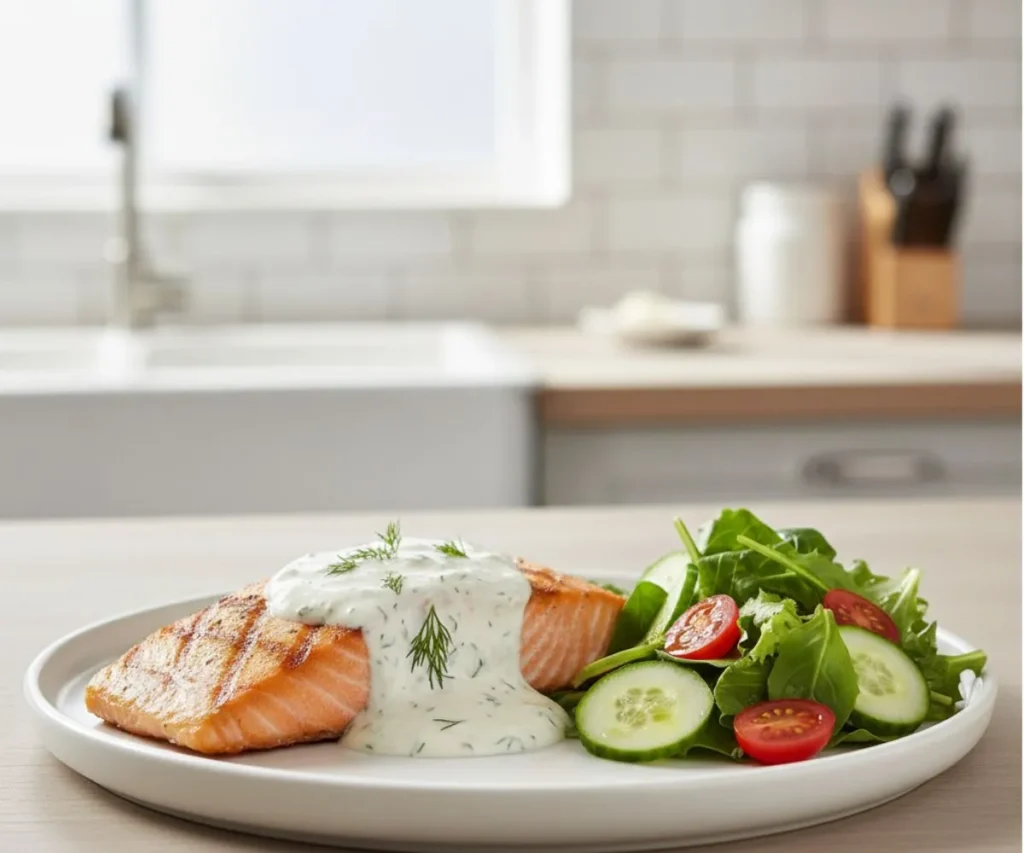
Dill salad dressing pairs well with:
- Green salads
- Cucumber and tomato salads
- Grilled salmon
- Chicken bowls
- Roasted potatoes
- Pasta salad
- Vegetable wraps
It works especially well in spring and summer meals.
Common Problems and How to Fix Them
Dressing Is Too Thin
Add more yogurt. Whisk again.
Dressing Is Too Thick
Add 1 teaspoon water or lemon juice.
Dressing Tastes Too Sour
Add a small amount of olive oil.
Dressing Separated
Whisk again. Mustard helps keep it stable.
Storage and Shelf Life
Store dill salad dressing in an airtight jar in the refrigerator.
- Yogurt or mayo version: 3–4 days
- Oil-only version: 5–7 days
Always stir before serving.
Do not freeze. Freezing changes texture.
Frequently Asked Questions
Can I use dried dill?
Yes. Use 1 teaspoon dried dill instead of 2 tablespoons fresh.
Can I make dill salad dressing ahead of time?
Yes. In fact, flavor improves after resting in the fridge.
Is dill salad dressing good for weight loss?
It can be. Choose yogurt-based versions and control oil amounts.
Conclusion
From my experience, making dill salad dressing at home is one of the simplest ways to improve your meals. When you use fresh dill and balance the ingredients correctly, the flavor becomes clean, bright, and natural. It does not taste heavy or artificial like many bottled options. After making it many times, I learned that small adjustments can make a big difference in taste and texture. Once you try homemade dill salad dressing, you will understand how much fresher and healthier it can be. It is a simple step that helps you enjoy better food with full confidence in your ingredients.

Dill Salad Dressing Recipe! Easy, Healthy, and Full of Fresh Flavor
Ingredients
Equipment
Method
- Add Greek yogurt to a bowl.
- Whisk in olive oil and lemon juice until smooth.
- Add dill, Dijon mustard, and minced garlic.
- Mix thoroughly until creamy.
- Mix thoroughly until creamy.
- Refrigerate for 30 minutes before serving for best flavor.
Notes
Serving Suggestions
- Green salads
- Cucumber & tomato salad
- Grain bowls
- Roasted potatoes
- Wraps and sandwiches
- Pasta salad
Variations
Dairy-Free Version
Use plant-based yogurt or cashew cream.Vinaigrette Version
Skip yogurt and increase olive oil to 4 tablespoons.Low-Calorie Version
Use non-fat yogurt and reduce oil to 1 tablespoon.Keto Version
Use full-fat yogurt or mayonnaise.Storage
- Refrigerate in an airtight jar
- Lasts 3–4 days (creamy version)
- Stir before serving
- Do not freeze
Notes & Tips
- Fresh dill gives the best flavor
- Adjust lemon juice for tanginess
- Add water 1 tsp at a time if too thick
- Mustard prevents separation
