


Cooking eggplant can be frustrating. It often turns soggy, oily, or bitter. Many people try making stuffed Japanese eggplant recipe and end up with collapsed halves or bland filling. I faced the same problem the first time I made this dish. The texture was too soft, and the flavor felt flat. That is when I realized technique matters more than ingredients.
After testing different methods like roasting, pan-frying, and broiling, I learned how to control moisture and build flavor. Japanese eggplant is naturally sweeter and less bitter than regular eggplant, but it still needs the right preparation. In this stuffed Japanese eggplant recipe, I will show you how to score it properly, balance the miso filling, and create light caramelization on top so it turns out creamy, rich, and perfectly cooked every time.
Quick Takeaways
- Japanese eggplant is sweeter and less bitter than regular eggplant.
- Scoring helps it cook evenly and absorb flavor.
- Nikumiso adds sweet and savory depth.
- Broiling creates light caramelization and better texture.
- This stuffed Japanese eggplant recipe works as both a main dish and a side.
What Is Nikumiso?
Nikumiso means “meat miso” in Japanese.
It is made with:
- Ground meat
- Miso paste
- Sugar
- Soy sauce
- Mirin
It tastes sweet and salty. It is thick and rich. Nikumiso is often used as a topping. In this stuffed Japanese eggplant recipe, it becomes the filling.
Japanese Eggplant vs Regular Eggplant
| Feature | Japanese Eggplant | Globe Eggplant |
|---|---|---|
| Shape | Long and thin | Round and large |
| Taste | Sweeter | Slightly bitter |
| Seeds | Few and small | More seeds |
| Texture | Creamy when cooked | Spongier |
| Best For | Stuffed dishes, grilling | Casseroles, frying |
What Is Nasu Dengaku?
Nasu means eggplant in Japanese. Dengaku is grilled food brushed with sweet miso glaze. Nasu dengaku is grilled or broiled eggplant topped with miso sauce. It is a classic Japanese dish. Stuffed Japanese eggplant is a variation. Instead of only glaze, it includes filling inside.
What Kind of Eggplant Do You Use for Nasu Dengaku?
Japanese eggplant is long and thin. It has smooth, dark purple skin. The seeds are small. It is sweeter than globe eggplant. It is also less bitter.
Choose eggplants that are:
- Firm
- Shiny
- Heavy for their size
Avoid soft spots or dull skin.

What Kind of Miso Do You Use for Stuffed Japanese Eggplant Recipe?
You can use:
- White miso
- Yellow miso
- Red miso
White miso is mild and sweet. It is best for beginners. Red miso is stronger and saltier. It pairs well with meat. Yellow miso is balanced. Always check the label. Some miso contains fish stock.
Is Stuffed Japanese Eggplant Recipe Vegan?
Yes, it can be vegan.
Replace meat with:
- Crumbled tofu
- Finely chopped mushrooms
- Lentils
- Plant-based meat
Use white or yellow miso for a softer taste.
How Do I Make Stuffed Japanese Eggplant Recipe?
Here is the simple method:
- Slice eggplants in half lengthwise.
- Score the inside in a crisscross pattern.
- Brush with oil.

- Roast until soft.
- Add filling.
- Broil until lightly caramelized.
Scoring helps heat spread evenly. It also allows oil to absorb better. Oil prevents the eggplant from drying out. Broiling at the end creates light caramelization. This adds deeper flavor.
Ingredients
For the Eggplant:
- 4 Japanese eggplants
- 2 tablespoons neutral oil
- Salt
For Nikumiso Filling:
- ½ pound ground chicken or beef
- 2 tablespoons miso paste
- 1 tablespoon soy sauce
- 1 tablespoon sugar
- 1 tablespoon mirin
- 1 teaspoon grated ginger
For Dengaku Sauce (Optional):
- 1 tablespoon miso
- 1 teaspoon sugar
- 1 teaspoon mirin
Garnish:
- Sliced green onions
- Sesame seeds
Instructions
Make the Eggplant
- Preheat oven to 400°F.
- Slice eggplants in half.
- Score the flesh.
- Brush with oil and sprinkle salt.
- Roast for 20 minutes until soft.
Common Mistakes to Avoid
- Not scoring the eggplant deeply enough.
- Using too much oil, which makes it greasy.
- Skipping the broil step.
- Overcooking until the eggplant turns mushy.
- Adding too much sugar to the miso mixture.
Make the Nikumiso
- Heat a pan over medium heat.
- Cook ground meat until browned.
- Add miso, soy sauce, sugar, mirin, and ginger.
- Stir until thick and glossy.

Assemble and Finish
- Spoon filling onto roasted eggplant.
- Add optional dengaku sauce.
- Broil for 3–5 minutes.
- Garnish and serve warm.

Cooking Techniques Compared
You can cook stuffed Japanese eggplant in different ways.
Roasting
Easy and reliable. Best for beginners.
Grilling
Adds smoky flavor. Great for summer.
Pan-frying first
Traditional in some Japanese methods. Creates richer texture.
Air frying
Faster cooking time. Uses less oil. Roasting remains the simplest method for this stuffed Japanese eggplant recipe.
Cooking Time Guide
| Method | Temperature | Time |
|---|---|---|
| Oven Roast | 400°F | 20–25 minutes |
| Broil Finish | High | 3–5 minutes |
| Grill | Medium | 10–12 minutes |
| Air Fry | 375°F | 12–15 minutes |
Ingredient Substitutions
- No mirin? Use 1 teaspoon sugar plus 1 teaspoon rice vinegar.
- No miso? There is no perfect substitute. However, you can mix tahini with soy sauce for a different flavor.
- Need gluten-free? Use tamari instead of soy sauce.
Storage and Reheating
Store leftover stuffed Japanese eggplant in an airtight container. Keep in the fridge for up to 3 days.
To reheat:
- Oven: 350°F for 10 minutes
- Air fryer: 5–6 minutes
- Microwave: 1–2 minutes
The oven keeps the best texture. This dish also works well for meal prep.
Serving Suggestions
Stuffed Japanese eggplant can be:
- A main dish
- A side dish
Serve it with:
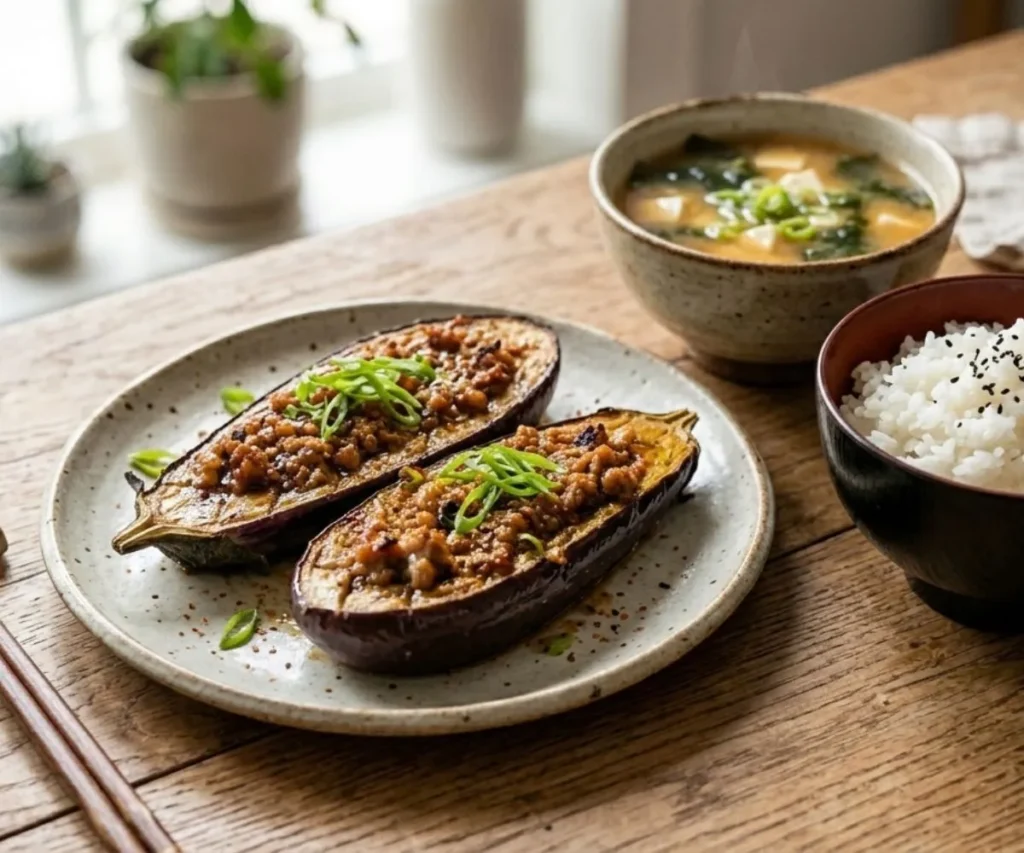
- Steamed rice
- Miso soup
- Pickled vegetables
- Simple cucumber salad
It pairs well with light and fresh sides.
Nutrition (Estimated Per Serving)
- Calories: 220–300
- Protein: 15–20g
- Fiber: 4g
- Low in carbs
Eggplant contains antioxidants. One key compound is nasunin. Nasunin helps protect cells from damage.
This stuffed Japanese eggplant recipe fits into:
- Balanced diets
- High-protein meal plans
- Lower-carb diets
Flavor Variations
| Style | Add This |
|---|---|
| Spicy | Chili paste or red pepper flakes |
| Citrus | Yuzu zest or lemon juice |
| Nutty | Toasted sesame oil |
| Extra Umami | Finely chopped shiitake mushrooms |
Frequently Asked Questions
Is Japanese eggplant different from regular eggplant?
Yes. Japanese eggplant is thinner and sweeter. It has fewer seeds.
Why do you score eggplant before roasting?
Scoring helps it cook evenly. It also helps oil absorb better.
Can I grill stuffed Japanese eggplant?
Yes. Grill the halves first. Add filling later. Finish over indirect heat.
Can I make this stuffed Japanese eggplant recipe ahead of time?
Yes. Prepare the filling in advance. Stuff and roast before serving.
Final Thoughts on Stuffed Japanese Eggplant Recipe
Stuffed Japanese eggplant may look simple, but the right method makes all the difference. From my experience, scoring the flesh deeply, using the correct amount of oil, and finishing under the broiler are the three steps that transform this dish from average to excellent. When done properly, the eggplant becomes creamy inside, slightly caramelized on top, and balanced in sweet and savory flavor. If you follow this stuffed Japanese eggplant recipe carefully, you will avoid common mistakes and gain confidence cooking eggplant the right way.

Stuffed Japanese Eggplant Recipe! Miso & Nikumiso Style
Ingredients
Equipment
Method
- Preheat oven to 400°F (200°C).
- Slice eggplants in half lengthwise. Score the flesh in a crisscross pattern without cutting through the skin. Brush with oil and sprinkle lightly with salt.
- Place eggplants cut-side up on a baking sheet. Roast for 20 minutes until tender and slightly golden.
- Heat a skillet over medium heat. Cook ground meat until browned. Add miso paste, soy sauce, sugar, mirin, and grated ginger. Stir until thick, glossy, and well combined.
- Spoon the nikumiso filling evenly over roasted eggplant halves. Brush with optional dengaku sauce if desired.
- Broil for 3–5 minutes until lightly caramelized and bubbling on top.
- Top with sliced green onions and sesame seeds. Serve warm.
Notes
- Scoring helps the eggplant cook evenly and absorb flavor.
- Japanese eggplant is sweeter and less bitter than globe eggplant.
- White miso gives a mild flavor; red miso creates deeper umami.
- For a vegan version, replace meat with chopped mushrooms or crumbled tofu.
- Use tamari instead of soy sauce for a gluten-free option.
Recipe Notes (Meal Prep & Storage)
- Store in an airtight container up to 3 days in the refrigerator.
- Reheat in the oven at 350°F for 10 minutes for the best texture.
- Air fryer reheating: 5–6 minutes.
- Microwave: 1–2 minutes (softest texture).
