


Many people turn to a vegetable ramen noodles recipe when they feel tired, busy, or low on groceries. I have done the same many times. It feels like the easiest meal choice. However, after eating plain instant ramen, you may feel bloated or still hungry. The high sodium and low fiber can leave you unsatisfied. Students, busy professionals, and even families face this problem often.
Over the years, I have tested different ways to improve vegetable ramen noodles at home. I have compared broths, tried whole wheat noodles, reduced sodium, and experimented with fresh vegetables and plant proteins. Some bowls were too salty. Others lacked flavor. Through experience and careful adjustments, I learned how to balance taste, nutrition, and cost. In this guide, I will share what actually works so you can build a healthier and more satisfying bowl every time.
🔎 Quick Takeaways: Vegetable Ramen Noodles
- Plain instant ramen contains 1,300–1,800 mg sodium per serving.
- Adding vegetables increases fiber and essential vitamins.
- Use low-sodium broth to reduce salt intake.
- Add tofu or edamame to increase protein.
- Whole wheat noodles offer more fiber than refined noodles.
What Are Vegetable Ramen Noodles Recipe?
Vegetable ramen noodles are ramen made without meat. Instead, they use vegetables, plant-based broth, and seasonings. Some people use instant ramen. Others prefer fresh or whole wheat noodles. Both work well. In the United States, plant-based meals are growing in popularity. Because of this, vegetable ramen noodles are now a common home meal.
Who Are Vegetable Ramen Noodles Recipe Best For?
This dish fits many lifestyles.
Health-Conscious Eaters
You can control sodium and add fiber-rich vegetables.
Busy Students and Professionals
It cooks in 10–15 minutes. It is perfect for dorm rooms or quick dinners.
Vegetarians and Vegans
Use vegetable broth and skip eggs. Then it becomes fully plant-based.
Budget Shoppers
Instant ramen is inexpensive. Adding vegetables improves nutrition at low cost.
Are Vegetable Ramen Noodles Recipe Healthy?
Vegetable ramen noodles can be healthy. However, instant ramen alone is usually high in sodium.
Average instant ramen contains:
- 1,300–1,800 mg sodium per serving
- Refined white flour noodles
- Low fiber
The daily sodium limit for adults is about 2,300 mg. One packet can contain over half that amount. However, you can improve your bowl easily.
How to Make Vegetable Ramen Noodles Recipe Healthier
Follow these steps:
- Use low-sodium vegetable broth
- Use only half the seasoning packet
- Add fresh vegetables
- Add plant protein like tofu or edamame
- Choose whole wheat noodles
- Add healthy fats like sesame oil
Because of these changes, your meal becomes balanced and filling.
How to Upgrade Your Vegetable Ramen Noodles
| Problem | Simple Fix | Result |
|---|---|---|
| Too much sodium | Use half seasoning packet | Lower salt intake |
| Not filling | Add tofu or edamame | More protein |
| Low fiber | Add broccoli or spinach | Better digestion |
| Bland flavor | Add miso or mushrooms | Stronger umami taste |
| Too processed | Use fresh homemade broth | Cleaner ingredients |
Nutrition Breakdown
Here is a realistic comparison:
| Type | Calories | Sodium | Fiber | Protein |
| Plain Instant Ramen | 350–400 | 1,500 mg | 1–2g | 7–9g |
| Vegetable Ramen (Upgraded) | 400–500 | 600–900 mg | 5–8g | 12–20g |
Adding vegetables increases fiber and vitamins. Adding tofu increases protein. Therefore, vegetable ramen noodles can become a well-rounded meal.
Nutrition Snapshot Per Bowl (Approximate)
| Nutrient | Basic Instant | Upgraded Vegetable Version |
|---|---|---|
| Calories | 380 | 450 |
| Sodium | 1,600 mg | 750 mg |
| Fiber | 2g | 7g |
| Protein | 8g | 18g |
Best Vegetables for Vegetable Ramen Noodles Recipe
Use a mix of textures and colors.
Great options include:
- Bok choy
- Mushrooms
- Carrots
- Corn
- Spinach
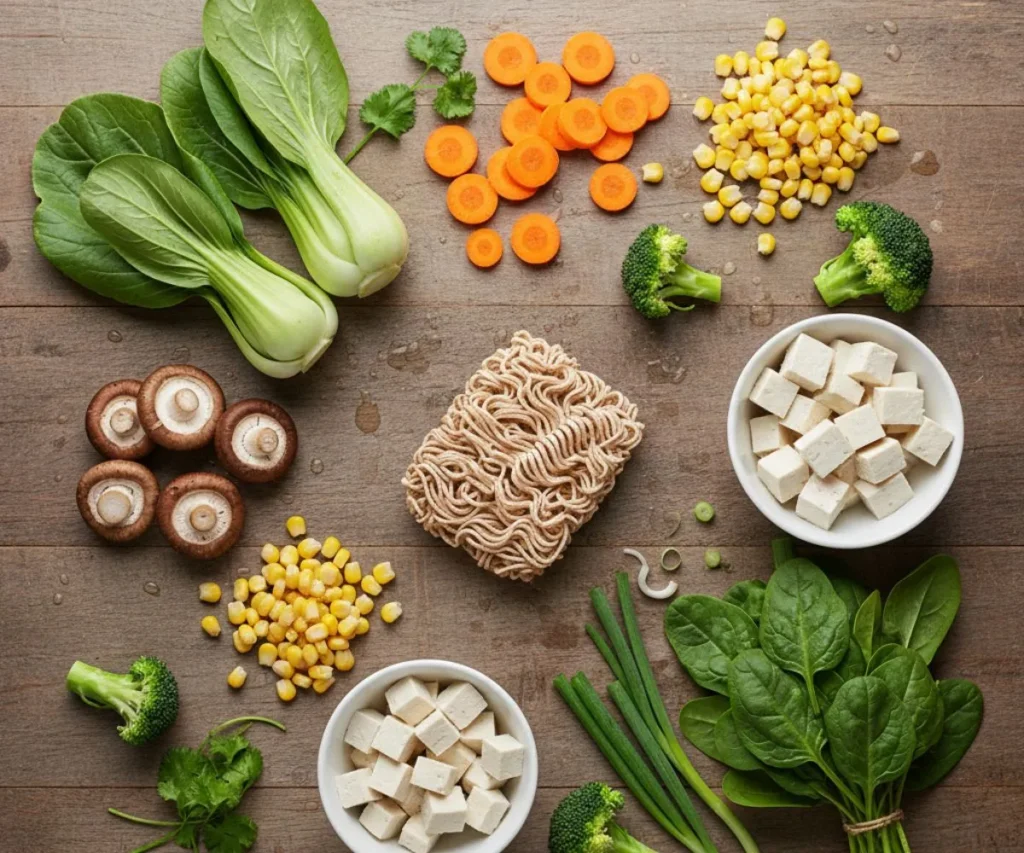
- Broccoli
- Bell peppers
- Green onions
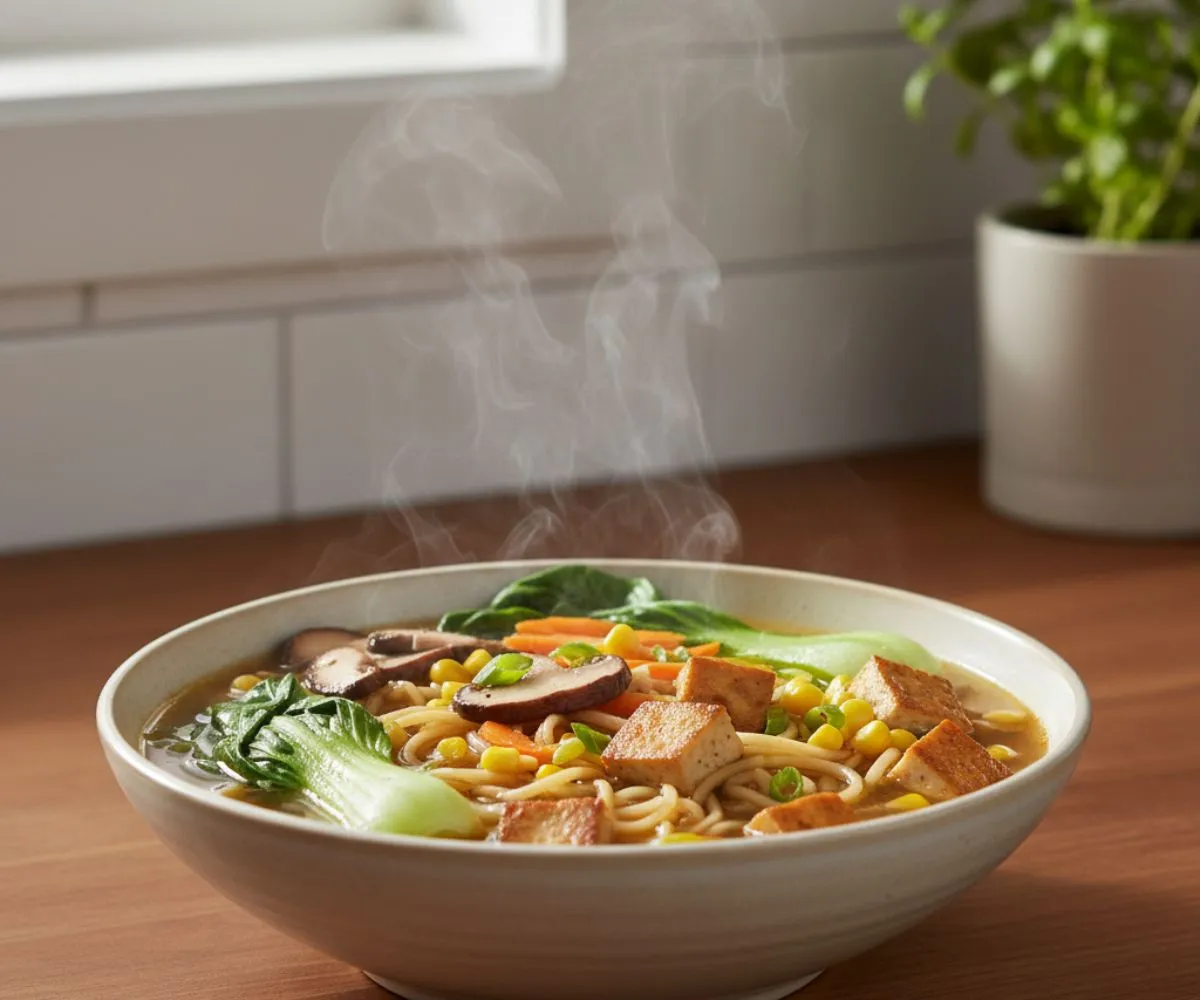
Mushrooms add deep flavor. Leafy greens cook quickly. Corn adds sweetness. Mix soft and crunchy vegetables for better texture.
Why This Vegetable Ramen Recipe Works
This method works because it balances:
- Salt (soy sauce or broth)
- Fat (sesame oil)
- Umami (mushrooms, miso)
- Freshness (greens and herbs)
Umami is a savory taste. Mushrooms and soy sauce create this rich flavor. When you combine umami with fresh vegetables, the bowl tastes complete.
Equipment You Need
You do not need special tools.
- Large pot
- Knife
- Cutting board
- Strainer
- Optional: skillet for stir-fry style
Simple tools make this recipe easy.
Easy Vegetable Ramen Noodles Recipe (15 Minutes)
Ingredients
- 1 pack ramen noodles
- 2 cups low-sodium vegetable broth
- 1 cup mixed vegetables
- 1 teaspoon soy sauce
- 1 teaspoon sesame oil
- ½ cup tofu (optional)
- Green onions for topping
Instructions
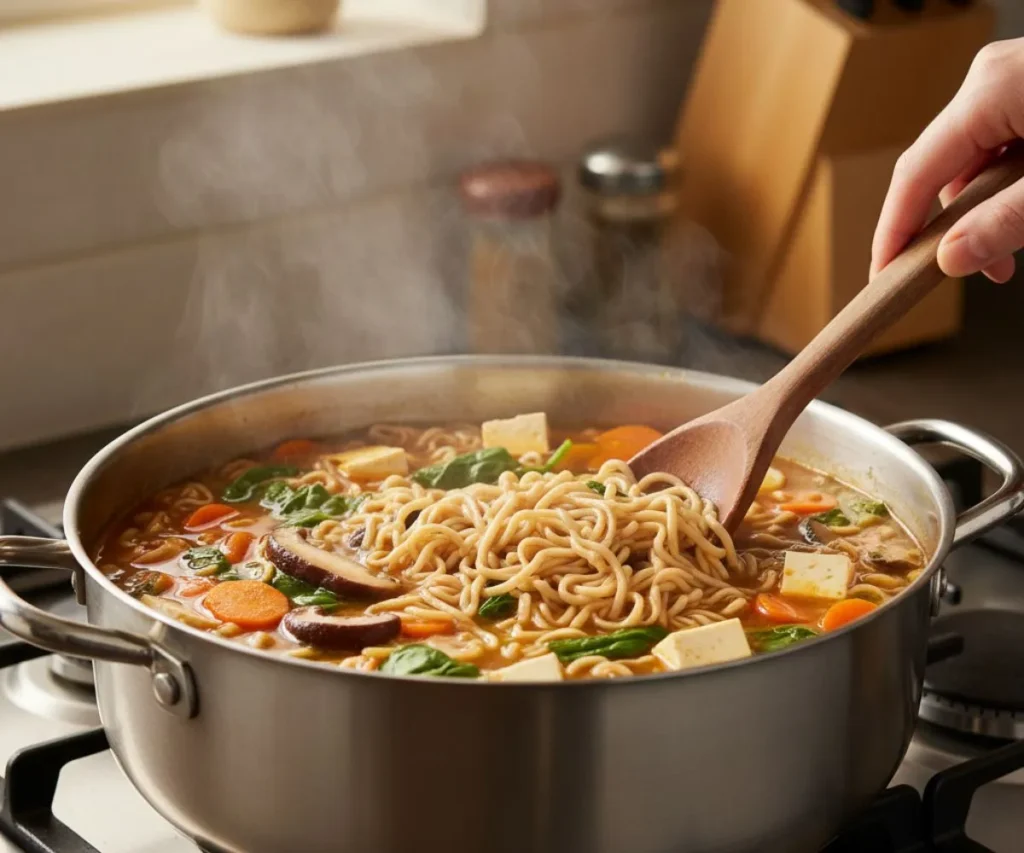
- First, boil the vegetable broth.
- Next, add ramen noodles.
- Cook for 2–3 minutes.
- Then add vegetables and tofu.
- Cook for another 2–3 minutes.
- Finally, add soy sauce and sesame oil.
Serve hot. Top with green onions.
⚠ Common Mistakes When Making Vegetable Ramen Noodles
- Adding vegetables too early (they become soggy)
- Overcooking the noodles
- Using the full seasoning packet
- Not balancing salt and healthy fat
- Storing noodles in broth for too long
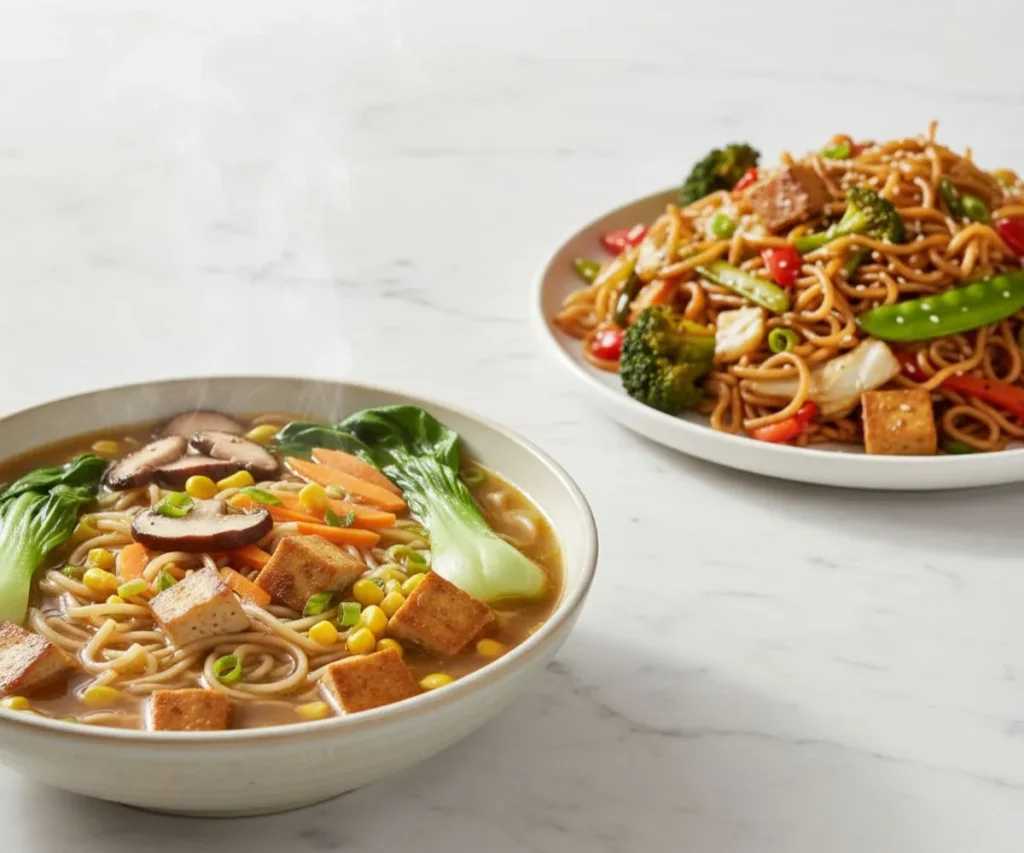
Stir-Fry vs Soup Style
You can cook vegetable ramen noodles in two ways.
Soup Style
Cook noodles in broth. This version is light and comforting.
Stir-Fry Style
Boil noodles first. Then stir-fry with vegetables in a skillet. This version is less soupy and more flavorful. Both methods work well. Choose based on preference.
Recipe Variations
1. Spicy Vegetable Ramen
Add chili paste or sriracha.
2. Miso Vegetable Ramen
Add 1 tablespoon miso paste to broth.
3. Creamy Coconut Ramen
Add ¼ cup coconut milk for richness.
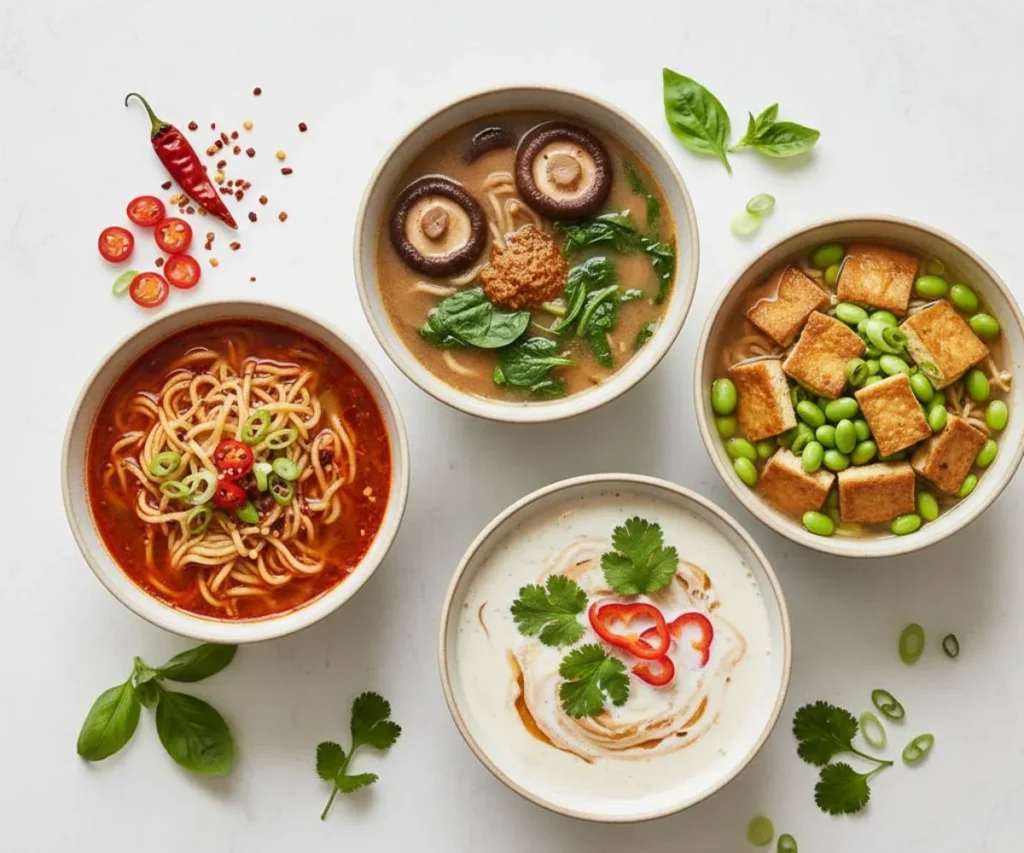
4. High-Protein Version
Add tofu, edamame, or a soft-boiled egg.
5. Gluten-Free Option
Use rice noodles instead of wheat ramen. These variations help you customize your bowl.
Best Noodles to Buy in the USA
When shopping, look for:
- Lower sodium options
- Whole wheat noodles
- Minimal additives
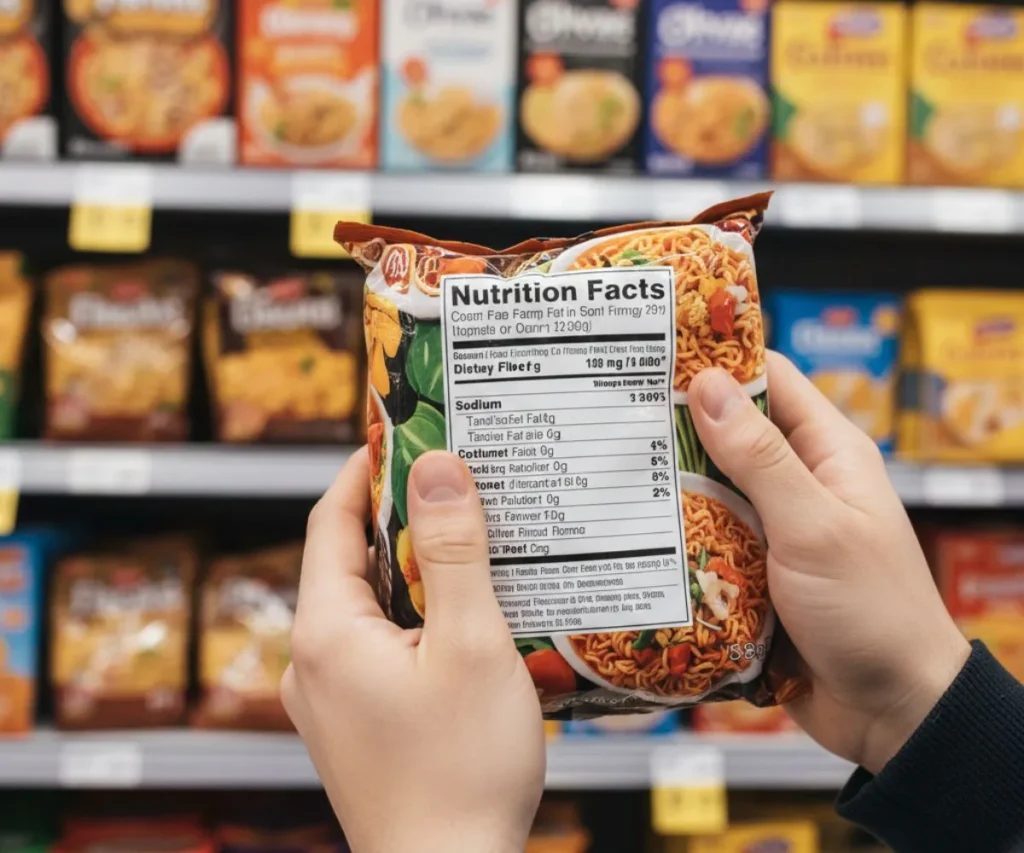
You can also check the nutrition label for:
- Sodium under 900 mg
- Fiber above 3g
- Protein above 10g
Reading labels helps you choose better vegetable ramen noodles.
How to Store and Reheat
Store broth and noodles separately if possible.
Keep in the refrigerator for 2–3 days.
To reheat:
- Heat broth first
- Add noodles last
- Avoid overcooking
This keeps the texture firm.
Budget Tips
Vegetable ramen noodles are already affordable. However, you can save more by:
- Buying frozen vegetables
- Buying store-brand ramen
- Cooking in bulk
- Using affordable proteins like tofu
You can prepare a full meal for just a few dollars.
Cultural Background of Ramen
Ramen comes from Japanese cuisine. Traditionally, it includes broth, noodles, and toppings. Over time, vegetarian and vegetable versions became popular. In the United States, plant-based ramen has grown due to interest in healthier eating. Today, vegetable ramen noodles are both traditional and modern.
Frequently Asked Questions
Are vegetable ramen noodles vegan recipe?
Yes, if you use plant-based broth and skip eggs.
Are vegetable ramen noodles good for weight loss?
They can be, if you reduce sodium and control portion size.
Can I meal prep vegetable ramen?
Yes. Store broth separately from noodles.
What protein can I add?
Tofu, tempeh, edamame, or eggs.
🥢 The Balanced Vegetable Ramen Formula
- 1 Part Noodles
- 1 Part Vegetables
- 1 Protein Source (Tofu, Edamame, Egg)
- 1 Healthy Fat (Sesame Oil)
- 1 Flavor Booster (Miso, Mushrooms, Soy Sauce)
Final Thoughts
Vegetable ramen noodles do not have to be a last-minute meal with poor nutrition. With small but smart changes, they can become balanced, flavorful, and affordable. From reducing sodium to adding fiber-rich vegetables and plant-based protein, each step improves the quality of your bowl. Based on years of testing and refining simple cooking methods, I can confidently say that understanding flavor balance and nutrition makes all the difference. When you apply these principles, you gain control over your meals and turn a basic dish into something both satisfying and supportive of your health.
Vegetable Ramen Noodles Recipe! Make Them Healthy & Filling
Ingredients
Equipment
Method
- Pour vegetable broth into a pot and bring to a gentle boil over medium heat.
- Add ramen noodles to the boiling broth.
- Cook for 2–3 minutes until slightly tender.
- Add mixed vegetables and tofu (if using).
- Cook for another 2–3 minutes until vegetables are tender-crisp.
- Stir in soy sauce and sesame oil. _ Taste and adjust seasoning if needed.
- Ladle into bowls.
- Top with green onions and optional toppings. Serve hot.
Notes
Serving Suggestions
- Chili oil or hot sauce
- Lime wedges
- Toasted sesame seeds
- Soft-boiled egg (vegetarian option)
- Fresh herbs
Notes & Tips
- Use only half the seasoning packet to reduce sodium
- Whole wheat noodles increase fiber
- Mushrooms add deep umami flavor
- Add miso paste for a richer broth
- Mix soft and crunchy vegetables for the best texture
Storage
Refrigerator: 2–3 days (store broth and noodles separately if possible)Reheating: Heat broth first, then add noodles to avoid mushiness
Freezing: Not recommended (noodles may become soft)
